Bracing Rod Manufacturer in Pune
Bracing rods are one of those components that rarely get noticed until they're missing yet they are what keep a steel structure from swaying, shifting, or failing under wind and seismic load. This page explains what bracing rods are, how they work, how they're made, and what to check before you place an order, so you can specify and buy with confidence.
We manufacture bracing rods for pre-engineered buildings, industrial sheds, and steel fabrication projects, and the manufacturer you choose directly affects how well your structure performs over its lifetime
As a Pune-based manufacturer of foundation and structural hardware, we work regularly with fabricators, contractors, and project teams who need bracing rods manufactured to a specific structural drawing rather than picked off a generic size list
The sections below follow the order most buyers actually think through the product: what it is, how it performs, what it's made from, how it's sized, how it's manufactured, and what to check before committing to an order
What Is a Bracing Rod?
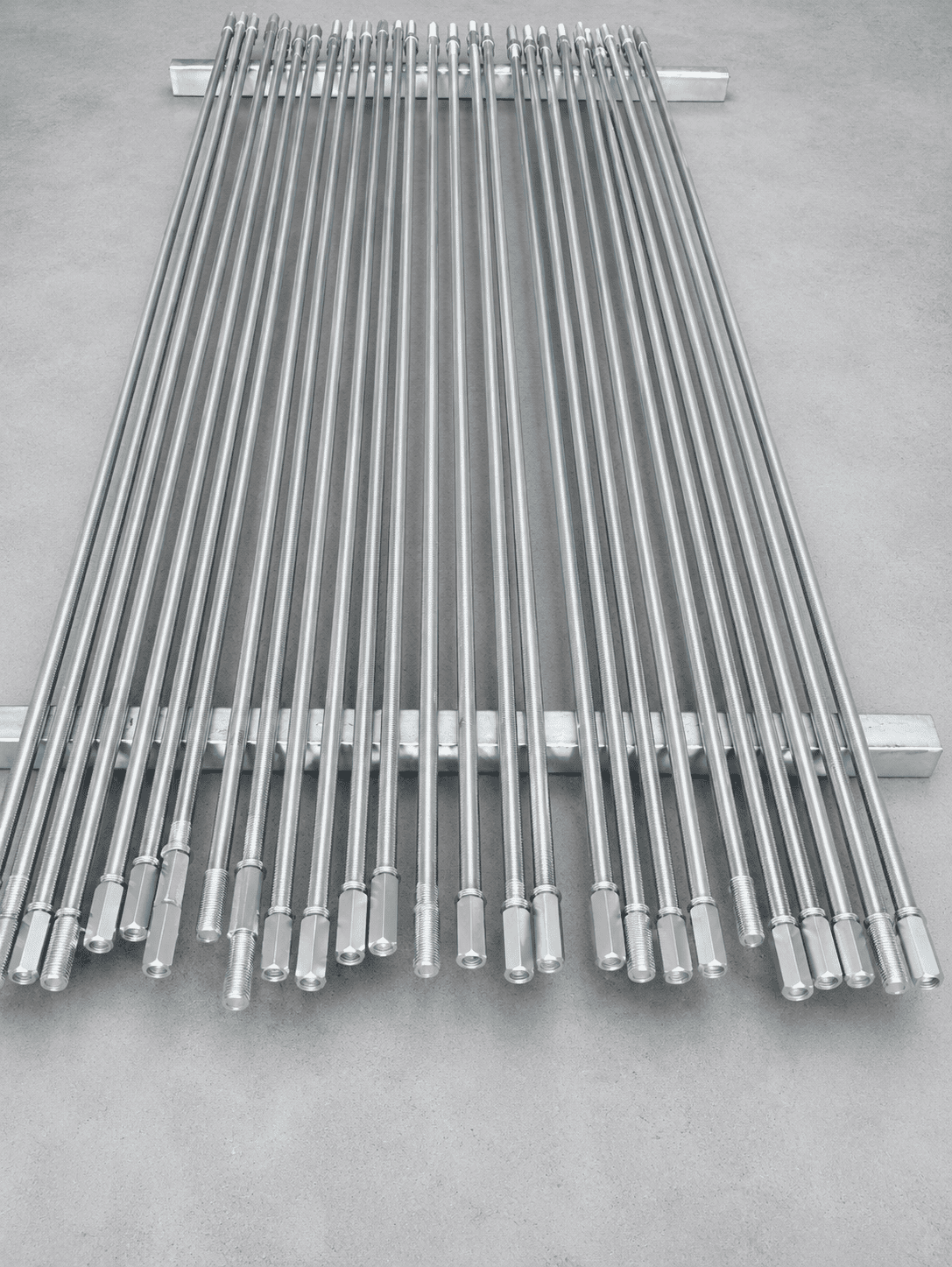
A bracing rod is a slender steel structural member installed diagonally, horizontally, or vertically within a building frame to resist lateral forces such as wind pressure, seismic movement, and load-induced sway. It works in tension, transferring these lateral forces from the structural frame down to the foundation, keeping the overall structure stable and preventing excessive deflection or racking.
Because steel performs efficiently in tension, a relatively slender rod can resist significant lateral force without adding excessive weight or bulk to the structure
In most PEB and industrial shed designs, bracing rods work in pairs on opposing diagonals, so lateral force from either direction is resisted by one rod in tension while the other remains slack
Bracing is usually specified in matched pairs rather than as single rods, since the structural engineer's calculation accounts for both directions of possible sway
A mismatched or incomplete bracing pair can leave the structure under-braced in one direction even if it looks correctly installed at a glance
A rod that is even slightly under- or over-length relative to its design span won't develop the correct pre-tension when the connection hardware is tightened, which can reduce its effectiveness under load
This is why manufacturing to an exact drawing, rather than a nominal "close enough" size, is treated as a core requirement on every order
Types of Bracing Rods
The right configuration depends on the structural design and the loads the frame needs to resist.
Cross bracing rods installed in an X-pattern between two structural points, commonly used for wall and roof bracing in PEB structures, since the pair together resists sway from either direction
Diagonal bracing rods a single rod set at an angle between two connection points, used where the design only calls for resistance in one primary direction or where space constraints rule out a full cross pattern
Threaded rods with turnbuckles allow on-site tensioning and adjustment after installation, useful where the exact final span can vary slightly due to fabrication or erection tolerances
Plain threaded-end rods connected directly using nuts and washers, used where field adjustment isn't required and the design span is fixed and confirmed in advance
The correct configuration for a given project is determined by the structural engineer's design and load calculations, not chosen independently by the fabricator or the rod supplier
If you're unsure which configuration your project needs, that's a question for your structural consultant first we manufacture to whatever configuration the drawing specifies once it's confirmed
Materials Used for Bracing Rods
Bracing rods are most commonly manufactured from mild steel, selected for its combination of tensile strength, weldability, and cost-efficiency in structural applications.
Material selection affects how the rod performs under load, how well it accepts a protective finish, and how long it lasts once installed
Strength requirement should be determined by the structural engineer's tension load calculation rather than by rod diameter alone; two rods of the same diameter can have very different load capacities depending on the steel grade
Environmental exposure rods installed in humid, coastal, or chemically exposed environments generally need a more robust corrosion-resistant finish than rods used in a dry, sheltered industrial shed
Weldability and formability relevant where the rod or its end fittings need to be adapted on site during erection
Finish compatibility the base material affects what surface treatments, such as painting or galvanizing, can be applied effectively and how well they hold up over time
We recommend buyers confirm the required material grade with their structural engineer or consultant and share this with us at the quotation stage, since load-bearing specifications should always come from the project's structural design
Bracing Rod Sizes and Specifications
Bracing rods are manufactured to the dimensions and configuration specified for each project rather than sold purely off a standard catalog. Before manufacturing can begin, a handful of parameters need to be clearly defined:
We deliberately don't list fixed diameters, grades, or tolerances on this page, since specifications should always be derived from your project's structural drawings share your requirement with us, ideally with the drawing, and we will manufacture to the dimensions you specify
Bracing Rod Manufacturing Process
Our manufacturing approach follows a structured sequence intended to maintain dimensional accuracy and consistency across every order, from a single prototype rod to a full project batch:
Material selection
Material selection raw steel is chosen based on the confirmed project requirement
Cutting to length
Cutting to length bars are cut to the specified rod length, with allowance built in for the threading process that follows
Threading
Threading thread ends are cut to the required pitch, length, and type as specified in the order
End-fitting assembly turnbuckles, nuts, or other connection hardware are fitted onto the rod where the design calls for it
Surface finishing commonly painting, applied to protect the rod against corrosion during storage, transport, and its service life once installed
Inspection dimensional and visual checks confirm the batch matches the specification before anything is packed
Packaging done in a way appropriate to the rod length, quantity, and mode of transport, aimed at preventing thread damage or bending in transit
This sequence may be adjusted depending on the configuration and finish requested a plain threaded-end order, for instance, skips the end-fitting assembly step that a turnbuckle-based order requires
Features and Benefits of Bracing Rods
Reliable lateral support helps steel structures resist wind and seismic-induced sway as intended by the structural design
Consistent dimensional accuracy threaded ends and lengths manufactured to the specified drawing, which matters directly for how the rod performs once tensioned in place
Corrosion-resistant finishing options support a longer service life in industrial environments where humidity, dust, or chemical exposure would otherwise degrade an unprotected steel surface
Customization length, thread type, and end configuration adapted to project-specific structural requirements rather than a fixed catalog size
Straightforward installation the rod and its fittings are designed to integrate cleanly with standard PEB and steel-frame connection details that erection teams already work with
Applications of Bracing Rods
Bracing rods are used wherever a steel-framed structure needs lateral stability rather than only vertical load support:
Pre-engineered buildings
Industrial sheds and warehouses
Steel structure fabrication and frames more generally
Roof and wall bracing systems within a building envelope
Infrastructure and structural support projects
Tower and utility structure installations
Commercial and industrial construction
In nearly all of these cases, the bracing rod is specified as part of the overall structural design rather than selected independently, which is why sizing and material decisions should trace back to the structural drawing rather than a generic size chart
Industries Served
Structural fabricators
PEB contractors
Industrial shed builders
Infrastructure contractors
Construction companies undertaking steel-framed projects
Procurement and project management teams typically source bracing rods as part of a broader structural steel package, alongside anchor bolts and other foundation and framing hardware, rather than as a standalone purchase
Coordinating bracing rods with related hardware from the same supplier can simplify both delivery scheduling and technical clarification during a project
Custom Bracing Rod Manufacturing
Most bracing rod orders are project-specific rather than off-the-shelf, since length, thread configuration, and end fittings vary by structural design from one project to the next. We manufacture bracing rods to custom requirements, including:
Quality Control and Inspection
Every batch goes through checks intended to catch dimensional or finish issues before dispatch, since a problem caught in-house is far less costly than one discovered on site:
Dimensional inspection verifies rod length and diameter against the specified drawing
Thread inspection checks thread pitch, length, and fit to make sure the connection hardware will engage correctly
Visual inspection checks for surface defects, bends, or handling damage that could affect appearance or performance
Surface and finish inspection confirms the applied finish meets the requirement specified for the project
Final inspection before packing a last check to confirm the batch matches the order specification in full before it leaves for dispatch
How to Choose the Right Bracing Rod Manufacturer
Before finalizing a supplier, it's worth evaluating them against a few practical criteria rather than price alone, since the cheapest quote isn't useful if the rods don't fit correctly on site:
A supplier who asks the right questions before quoting is usually a better sign of manufacturing discipline than one who quotes instantly without any specification at all
- 01 Can they manufacture to your exact drawing, including length, thread, and end configuration, rather than only offering standard stock sizes?
- 02 Do they ask for load and material requirements before quoting, or do they quote instantly without confirming your structural specification? The latter is often a sign that customization isn't really part of how they operate
- 03 What inspection do they perform before dispatch, and are they willing to share dimensional details on request?
- 04 Can they support your delivery timeline, particularly for site-critical project phases where a delay has knock-on costs?
- 05 Are they reachable directly for technical clarification, rather than only through a marketplace listing where follow-up questions can be slow or generic?
- 05 Do they genuinely offer customization, or only fixed catalog sizes dressed up as flexible?
Packaging and Delivery
Bracing rods are packed to protect threaded ends and prevent bending or surface damage during transport
The packing method is adjusted based on rod length, quantity, and the mode of transport used for a given order, since a long single rod and a bundled batch of shorter rods call for different handling
For project-based orders, we coordinate delivery schedules with your site or fabrication yard requirements share your timeline when requesting a quote so it can be factored into planning rather than confirmed only after the order is placed
Why Choose Us?
Pune Anchor Bolt manufactures foundation bolts, anchor bolts, sag rods, bracing rods, and industrial fasteners for construction, infrastructure, and fabrication projects
Based in Pune, within reach of the wider Pune–Chakan–Talegaon industrial and PEB fabrication belt, which allows for easier coordination on drawings, site-specific requirements, and delivery timelines for projects in the region, while also serving customers across India
Bracing rods manufactured to project-specific drawings and specifications rather than limited to a fixed catalog
Direct communication for technical clarification, before and during the order, rather than routed through a third-party listing
Customized sizes, thread configurations, and finishes handled based on your actual requirement
Bracing rods are part of a broader foundation and structural hardware range, so sourcing them alongside anchor bolts or sag rods for the same project is straightforward simplifying procurement and delivery coordination for teams managing a full structural hardware package